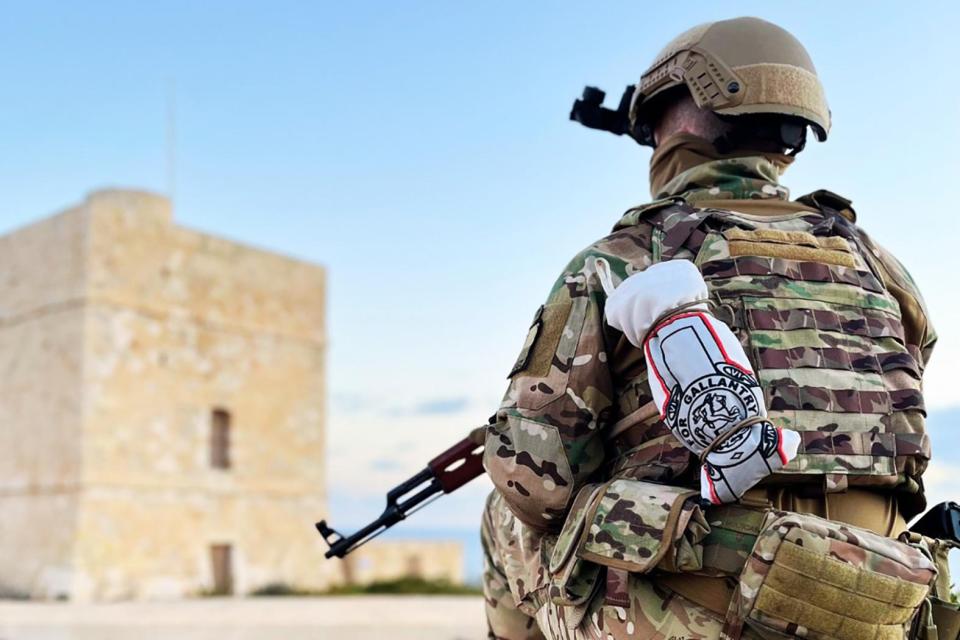


Repubblika understands the frustration of residents of Swieqi and neighbouring communities who have endured persistent noise, vandalism, littering, drunken behaviour and other disturbances associated particularly with short let accommodation and a tourism model that is becoming increasingly unsustainable. Residents have the right to feel safe in their homes and on their streets. They have the right to expect the authorities to enforce the law effectively and to respond promptly when that security is threatened. However, the deployment of members of the Armed Forces of Malta alongside the police to deter everyday antisocial behaviour raises serious questions that should not be ignored simply because residents, understandably, welcome any additional help they can get. Maintaining public order in normal circumstances is the responsibility of the Police Force. Soldiers are trained and organised for a different purpose. The regular use of military personnel to perform policing duties on the streets should therefore be exceptional, demonstrably necessary, and subject to clear safeguards and public scrutiny. Malta’s laws give members of the Armed Forces considerable powers when they are assigned patrol, guard, security or duties connected with criminal offences. This makes it all the more important that the government explains precisely what the soldiers deployed in Swieqi have been instructed and authorised to do. We therefore call on the Minister for Home Affairs and the government to clarify: On what legal and operational basis have members of the Armed Forces been deployed in Swieqi? What powers have they been authorised to exercise and in what circumstances? What rules govern their interaction with private individuals and the exercise of those powers? What training have the soldiers involved received to perform public order duties among private individuals? Are the soldiers deployed on these patrols armed and, if so, what rules govern the carrying and use of those weapons? Who exercises operational command and who is accountable when soldiers work alongside the police? Why has the Police Force been unable to provide sufficient personnel for these duties without military assistance? Is this an exceptional and temporary measure? And what criteria will determine when it ends or whether it is extended to other localities? This is not a criticism of individual soldiers or police officers. Both are public services whose members perform difficult duties, often in complicated circumstances. Nor should our asking these questions be interpreted as diminishing the seriousness of what Swieqi residents are experiencing. On the contrary, residents should not be placed in a position where they must choose between enduring disorder and accepting the normalisation of soldiers performing policing duties in their communities. The difficulties in Swieqi did not arise because Malta suddenly found itself facing a security emergency requiring a military response. They are the consequence of failures in public policy and enforcement that have accumulated over time: insufficient police resources, weak regulation of short let accommodation, excessive pressure on residential communities, and a tourism model that concentrates large numbers of visitors in areas that were never designed to accommodate them in this way. Deploying soldiers may give the impression that the State is more present. It does not address the causes of these problems. There are European countries where soldiers are regularly seen in public places. But practices adopted in other countries, often in response to terrorism or specific security threats, do not in themselves justify their introduction in Malta to deal with noise, drunkenness, littering and other ordinary public order offences. Maintaining order through a civilian police force that operates with the consent of the public is an important feature of a democratic society. The distinction between the police and the military exists for a reason. It should not be allowed gradually to blur because chronic failures in public policy and police resourcing make military deployment appear convenient. Exceptional measures have a tendency to become ordinary if nobody asks why they were necessary in the first place. The government must address the legitimate concerns of Swieqi residents. But it must also explain why it believes that soldiers on residential streets are part of the solution. Repubblika believes that the long term solution is a civilian police force with the necessary resources and proper accountability, effective regulation and enforcement, and policy that addresses the causes of the disorder residents are experiencing. Soldiers should not become a substitute for all of this. 13.08.2026
SOLDIERS SHOULD NOT BECOME A SUBSTITUTE FOR THE POLICE
Press Release PR 44/2026