

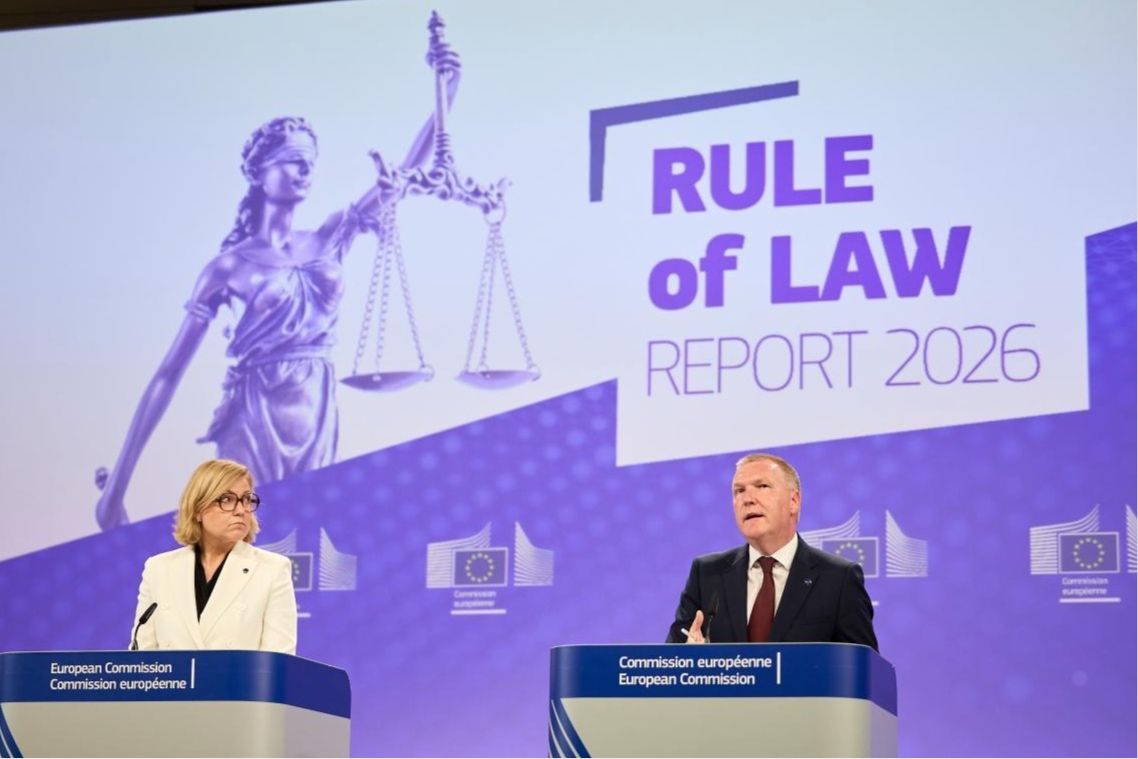

Repubblika welcomes the publication of the European Commission’s 2026 Rule of Law Report on Malta, which presents a sober and realistic assessment of the state of our institutions. Far from endorsing the Government’s repeated claims that the rule-of-law crisis has been overcome, the report confirms that many of the structural weaknesses identified in recent years remain unresolved, while progress in key areas has been slow, partial, or altogether absent.
The Commission’s recommendations are clear. Malta has still failed to strengthen judicial independence in the appointment of the Chief Justice, failed to improve the efficiency of the courts, failed to establish an effective record of final judgments in high-level corruption cases, failed to provide adequate protection for journalists, failed to introduce a proper framework for public participation in law-making, and failed to establish an independent National Human Rights Institution.
These are not technical shortcomings. They concern the basic safeguards that ensure public power is exercised in accordance with the law rather than political convenience.
Particularly worrying is the Commission’s repeated observation that reforms continue to be designed without meaningful engagement with Maltese civil society. Throughout the report, the Commission records concerns raised by civil society organisations and professional bodies, while noting the Government’s continuing reluctance to undertake the open, structured dialogue that constitutional reform requires. The absence of consultation has become a recurring feature of governance rather than an isolated failing, undermining both the quality and the legitimacy of reform.
Repubblika regrets that, despite repeated invitations and appeals over several years, the Government has consistently chosen not to engage with us in any meaningful discussion on constitutional reform, anti-corruption measures, judicial independence, media freedom or institutional accountability. A democracy cannot renew itself if those who govern refuse to listen to independent voices.
Our role has never been simply to criticise. Repubblika exists to defend the rule of law by identifying institutional weaknesses, exposing failures where they occur, and proposing practical reforms that strengthen democratic institutions. Throughout this year’s reporting cycle, as in previous years, we submitted detailed proposals, legal analysis and evidence to the European Commission, not because we seek criticism of Malta, but because we seek improvement for Malta.
We therefore renew our invitation to the Government to begin genuine dialogue with civil society. Constitutional reform cannot succeed if it is approached as a series of isolated legislative exercises undertaken behind closed doors. It requires openness, trust and a shared commitment to building institutions that will outlast any particular administration.
Malta deserves institutions capable of resisting political pressure, protecting fundamental rights and holding power to account. It deserves a justice system that is effective as well as independent, a public administration governed by integrity rather than patronage, and a State capable of confronting corruption at the highest levels instead of appearing powerless before it.
Repubblika remains ready to contribute constructively to that work. We stand prepared to work with any Government willing to engage seriously in strengthening the rule of law, renewing our democratic institutions and ensuring that Malta leaves behind this prolonged period of institutional fragility, hostility to accountability and persistent weakness in the face of grand corruption.
The Rule of Law Report is not an indictment of Malta. It is an opportunity. Whether that opportunity is taken now depends on whether the Government is prepared, at last, to replace self-congratulation with genuine reform.