

The latest Eurobarometer survey on corruption should serve as a warning to Malta’s political class.
The survey shows that Maltese citizens remain deeply concerned about corruption. An overwhelming majority of respondents believe corruption is widespread in Malta. Almost half believe it affects them in their daily lives. Four out of five believe that high-level corruption cases are not investigated and brought to justice as they should be. Above all, many believe that close links between business and politics contribute directly to corruption.
These findings are particularly significant because they were published only days after an election campaign in which corruption received very little attention. Political debate focused on many important issues, but corruption and the reforms needed to prevent and combat it were absent from the national conversation.
The survey suggests that this silence does not represent the public’s views.
Maltese citizens associate corruption with politics, public institutions, public procurement processes and planning decisions. They continue to express concern about the influence that powerful private interests exert on public life. They continue to doubt that those responsible for serious abuses are genuinely held accountable.
Corruption does not disappear because politicians stop talking about it. On the contrary, silence risks normalising behaviour that ought to be condemned. It creates the impression that corruption is no longer a national priority and carries no political cost.
Many respondents said they hesitate to report corruption because they fear retaliation or believe nothing will happen to those responsible. A culture of impunity is not created solely by acts of corruption. It is also created when corruption is ignored, excused or treated as inevitable.
These findings should therefore prompt serious reflection by all political parties.
Political parties cannot ignore legitimate questions about who finances political activity and what influence those who provide the funds may exercise.
Political parties depend entirely on private funding, while citizens have only limited visibility of the private interests that sustain political parties, candidates and election campaigns. This creates the risk that political parties may find it difficult to confront harmful practices that benefit powerful private interests because they cannot survive without the money those interests provide.
The greatest danger is the growing perception that corruption is tolerated because the institutions entrusted with combating it are constrained by the very system they are supposed to regulate.
The Eurobarometer findings should therefore be understood not only as a warning about corruption, but also as a warning about confidence in Malta’s democratic institutions and, ultimately, in democracy itself.
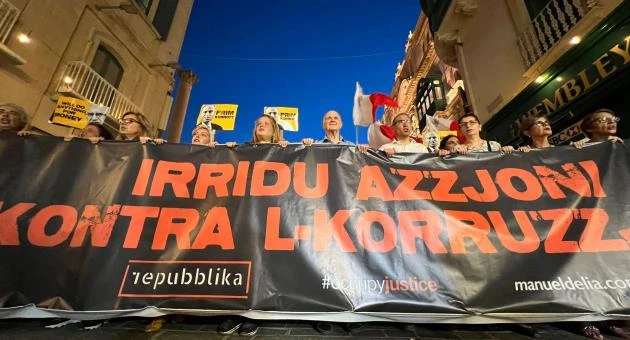
For many years, Repubblika has warned about the democratic weakness caused by a lack of transparency in political party funding. Before the election, Repubblika presented political parties with a programme of proposals to strengthen Malta’s democratic institutions and reinforce the fight against corruption. These included stronger protection for whistleblowers, greater transparency in public procurement, regulation of lobbying and influence over public decision-making, more effective safeguards against conflicts of interest, and more independent and effective enforcement of anti-corruption laws.
The survey shows that these reforms remain urgent and necessary.
Political parties have a responsibility to demonstrate, through their actions, transparency and commitment to reform, that they are prepared to confront corruption, even when doing so is politically inconvenient. The alternative is a continuing decline in public trust and a growing perception that the system is unwilling to correct itself.
The message from Maltese citizens is clear. Corruption remains a serious concern. Political leaders have a duty to listen.