

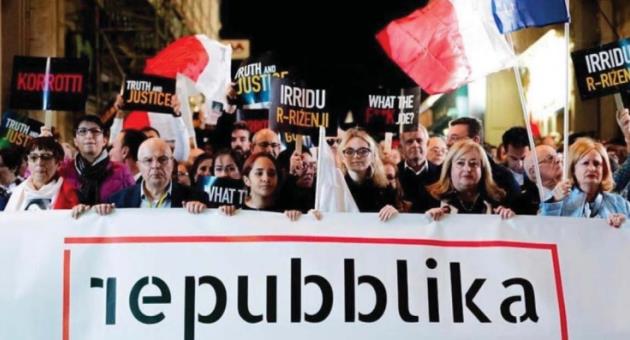


Repubblika is concerned by reports that Parliament will shortly be discussing amendments to the law regulating voluntary organisations, even though civil society organisations have not yet seen the legislative proposals that the Government appears to intend to present to Parliament.
Two years ago, the Government published a White Paper outlining general principles in this area. Subsequently, the Commissioner for Voluntary Organisations conducted consultations. However, there has never been any direct communication with the responsible Ministers regarding the contents of the law that now appears set for discussion in Parliament. Nor have we received any feedback on the positions and suggestions put forward during the consultation process.
We have now learned, through a statement by the Prime Minister on the Labour Party’s radio station, that Parliament will be discussing changes to the law which nobody outside Government has yet had the opportunity to see.
This is unacceptable.
Voluntary organisations are not merely service providers or agents carrying out work entrusted to them by the State. Many of them also play an essential role in criticising, challenging, and holding public authorities accountable to citizens. A free, independent and critical civil society is an essential component of a healthy democracy. For this reason, the legal framework that regulates it should be subject to the highest standards of transparency, consultation, and public participation.
Whatever the Government’s intentions may be, there can be no risk that legislative changes introduced without adequate scrutiny might have the effect—whether intended or not—of reducing, restricting or weakening civic space. Such risks can only be assessed if the proposals are known and discussed before Parliament is asked to approve them.
Unfortunately, this is not an isolated issue. It reflects a broader pattern in the Government’s approach to the legislative process. Too often, laws are drafted behind closed doors and presented to Parliament without any genuine opportunity for the public to participate in their development. Consultation becomes a formal exercise rather than a genuine process aimed at improving legislation through dialogue.
We have similar concerns regarding the other piece of legislation that the Government has identified as top of its parliamentary agenda: the establishment of a national human rights institution.
For many years, Repubblika and other civil society organisations have called for the creation of an independent human rights institution in line with the Paris Principles. This has long been an outstanding recommendation of the European Commission and other international bodies. Various proposals and contributions have been made over the years by constitutional bodies and civil society organisations. Yet the public has still not been given the opportunity to see or discuss the law that the Government appears ready to place before Parliament.
The draft legislation should be published immediately and subjected to proper public consultation before Parliament is asked to debate it. We made this appeal directly to government officials in December during discussions between government and civil society convened by the OSCE Office for Democratic Institutions and Human Rights (ODIHR). On that occasion, we learned that the government was working on draft legislation and requested that we be consulted on its contents. The government ignored us.
Once a law is brought before Parliament, public consultation has effectively ended. At that stage, the public is invited to react to a text that the government has already decided to present, rather than participate in shaping it. Laws affecting the rights, freedoms and institutional safeguards of citizens should not be presented as done deals.
This is not merely a matter of good administration. It is a matter of democratic governance. When the government asks Parliament to legislate without allowing the public to understand and discuss proposals beforehand, it undermines confidence in the democratic process itself.
It is significant that these legislative priorities were announced through a controlled interview on party media rather than in an environment where journalists could request copies of the draft laws and ask questions on behalf of the public.
The government should immediately publish its proposals concerning the law on voluntary organisations and the national human rights institution, and allow sufficient time for public discussion before they are considered by Parliament, so that the legislative process may benefit from the contribution of those who will be directly affected by them.
It is not democracy when laws governing civil society and laws intended to protect individuals’ fundamental rights are drafted without the participation of those affected by them. In a democracy, the public should be part of the law-making process before Parliament is asked to approve legislation.