

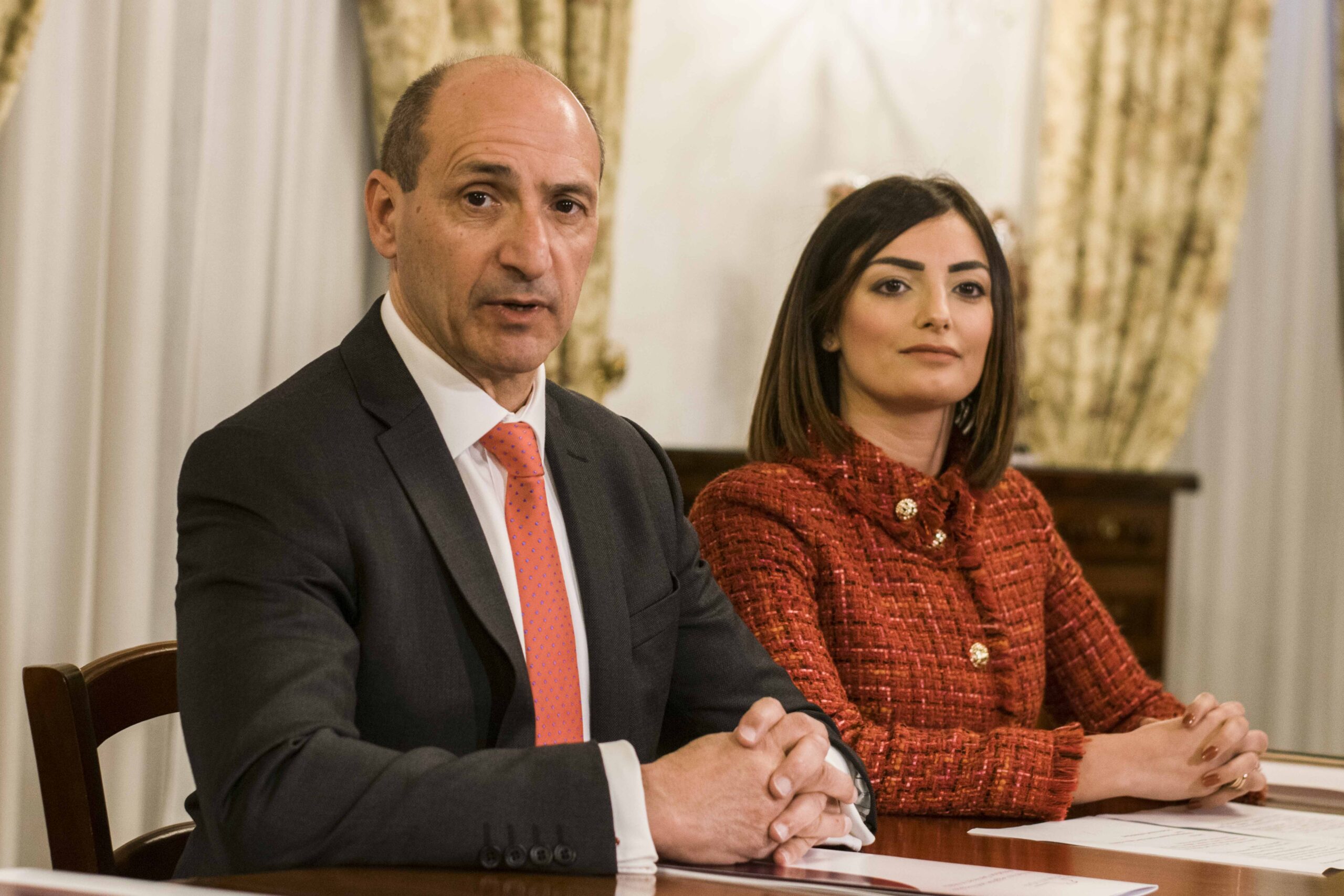


Repubblika notes the appointments of Chris Fearne and Rosianne Cutajar to the Cabinet despite the circumstances that had led both of them to resign from government.
Nothing has changed since those resignations.
In May 2024, Chris Fearne resigned as Deputy Prime Minister after being charged in court with fraud. At the time, his resignation was presented as recognition of an important democratic principle: that a government minister cannot continue exercising public authority while facing criminal charges related to the exercise of public office.
Rosianne Cutajar resigned from government in 2023 following findings by the Commissioner for Standards in Public Life concerning her conduct and amid serious concerns regarding her relationships with individuals implicated in major corruption scandals. At the time, the Prime Minister accepted that her position in government was incompatible with the standards of conduct expected of a Cabinet member.
The principles that justified those resignations remain valid today.
Chris Fearne is presumed innocent unless and until he is found guilty by a court. However, the criminal proceedings against him have not been withdrawn. The Maltese State, through its constitutional institutions, continues to maintain that there are sufficient grounds to prosecute Fearne for fraud. The reasons that led to his resignation, therefore, remain fully in place.
Likewise, the ethical concerns that led to Rosianne Cutajar’s resignation from government have not disappeared simply because time has passed. The findings that led to her resignation have neither been withdrawn nor overturned. No new facts have emerged that alter the circumstances that at the time rendered her position in Cabinet untenable.
The fact that both individuals have been elected to Parliament changes nothing about these realities.
Members of Parliament are elected by the people. Ministers are not. The decision to appoint ministers rests exclusively with the Prime Minister, who alone bears political responsibility for those choices.
Nor can the Prime Minister invoke electoral success to justify these appointments. If the circumstances concerning Chris Fearne and Rosianne Cutajar were sufficiently serious to require their departure from government, they remain sufficiently serious to preclude their return to Cabinet until those issues have been conclusively resolved.
The issue is not whether these individuals enjoy political support. The issue is whether the standards of ministerial responsibility that applied when they resigned still apply today.
If those standards no longer apply, the Prime Minister should explain what has changed. If nothing has changed, these appointments can only be understood as an abandonment of principles that the Government itself previously accepted.
The appointment of Chris Fearne is particularly troubling because the criminal proceedings against him remain pending. If the Government is convinced of his innocence, why does the prosecution continue? If the Prime Minister disagrees with the assessment of the Attorney General and the authorities responsible for prosecution, on what basis is he substituting his own judgement for that of the constitutional institutions entrusted with the enforcement of criminal law?
By restoring Chris Fearne to ministerial office while criminal proceedings remain pending, the Prime Minister is sending the message that the Government has already reached its own conclusion on a case that is still before the courts. This creates pressure on the judicial process and undermines public confidence in the independence of the institutions responsible for determining guilt or innocence.
The implications extend beyond Chris Fearne alone. He stands accused alongside other former senior public officials, including Joseph Muscat, Edward Scicluna, Konrad Mizzi, Keith Schembri and others. By treating the charges against Chris Fearne as politically irrelevant, the Government is implicitly inviting the public to disregard the seriousness of the proceedings against the other accused persons and to regard the outcome of those proceedings as already decided.
This is not simply a question about two individuals. It is a test of how willing Malta truly is to uphold the basic standards of democratic accountability expected of a state governed by the rule of law.
A country that permits ministers to govern while unresolved questions remain regarding criminal responsibility or serious ethical misconduct is normalising situations that ought to be regarded as exceptional and deeply troubling.
The Prime Minister’s decision suggests that loyalty to political allies remains a higher priority than respect for the institutions of justice and accountability. It is precisely this attitude that has repeatedly damaged Malta’s democratic reputation and weakened public trust in its institutions.
This episode demonstrates once again that Malta continues to suffer from a persistent weakness in its rule-of-law culture. Rather than strengthening the independence and authority of the institutions responsible for enforcing the law and safeguarding ethical standards in public life, the Government appears determined to undermine them whenever their work affects politically connected individuals.
The rule of law requires that political power be subject to legal and ethical accountability. It cannot be set aside whenever it becomes inconvenient for those in government.