

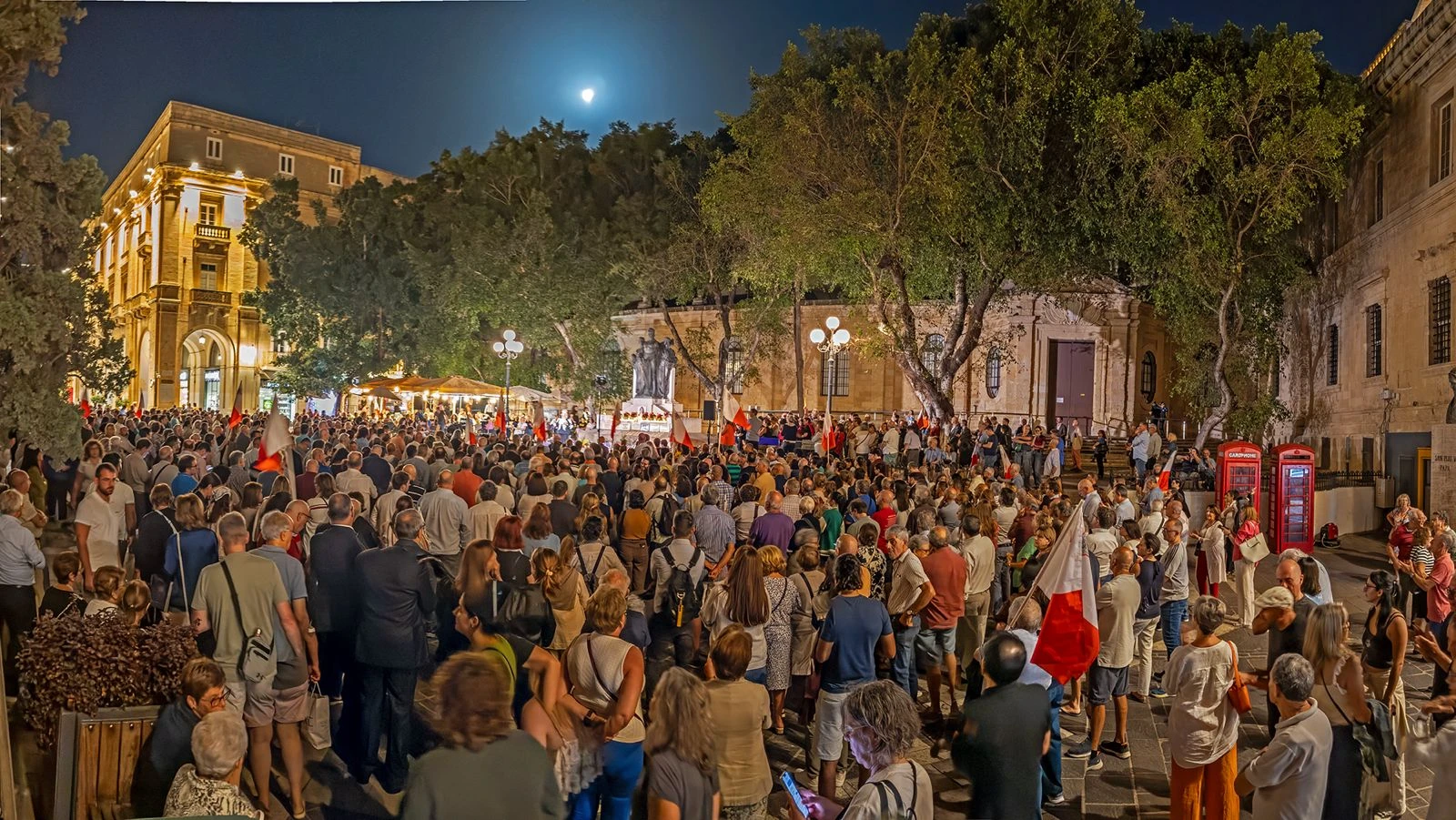


Repubblika welcomes the publication of the Bill establishing the National Commission for Human Rights and Equality.
For many years, Malta has remained among the few European countries without a National Human Rights Institution compliant with the Paris Principles, despite repeated recommendations from international bodies and the European Commission’s annual Rule of Law Reports, which successive governments ignored. It is therefore encouraging that the Government has finally acknowledged the need to address this gap in our country’s constitutional framework.
However, we regret that, once again, the Government has chosen to present Parliament with a Bill of constitutional importance without first undertaking a serious and meaningful public consultation.
The establishment of a National Human Rights Institution concerns the protection of the fundamental rights of every person in Malta. It was therefore to be expected that this reform would be developed through an open dialogue with civil society, independent constitutional institutions and experts in the field. Instead, the Government has once again presented Parliament with a completed text without involving those who have been calling for these reforms for years.
Civil society organisations have long advocated establishing a National Human Rights Institution. The Ombudsman had also presented a concrete proposal on how such an institution should be established. As far as can be seen, all this work has been ignored. This is not how constitutional reforms should be carried out in a mature democracy.
Repubblika is also concerned that the proposed mechanism for appointing the Commissioner and the members of the Commission does not sufficiently guarantee their independence from the executive.
Although the Bill declares that the Commission is to be independent, the appointment procedures continue a pattern we have already seen in other institutions where the Government retains substantial influence over the composition of bodies that are meant to oversee the Government itself. Independence is not achieved through declaratory language in legislation that no one can effectively enforce. It is achieved by creating appointment procedures that inspire public confidence and ensure that those entrusted with defending fundamental rights are not perceived as being dependent on political power.
One cannot help but ask: why does the Government continue to resist appointment systems that genuinely place independent institutions beyond executive control? What is it afraid of?
The Bill could also be strengthened by introducing more effective mechanisms to ensure pluralistic representation within the Commission, by reinforcing parliamentary scrutiny of its work, and by guaranteeing the resources and safeguards necessary to prevent its broader human rights mandate from being overshadowed by its important equality functions.
Malta needs a National Human Rights Institution that not only formally complies with the Paris Principles but also, in practice, enjoys the confidence of citizens, civil society and the international community.
Repubblika therefore calls on the Government to ensure that the parliamentary process now underway is accompanied by an open and meaningful public consultation. This should include direct and constructive dialogue with the responsible Ministers so that the final law is not merely another formality allowing Malta to respond to international recommendations, but a reform that genuinely strengthens the protection of fundamental rights and the rule of law in our country.
We also call on the Parliamentary Committee examining the Bill to hear detailed evidence from the Ombudsman, civil society organisations, members of the legal professions and independent experts before Parliament concludes its consideration of the Bill. A reform of this magnitude deserves the highest standards of transparency, participation and national consensus.