

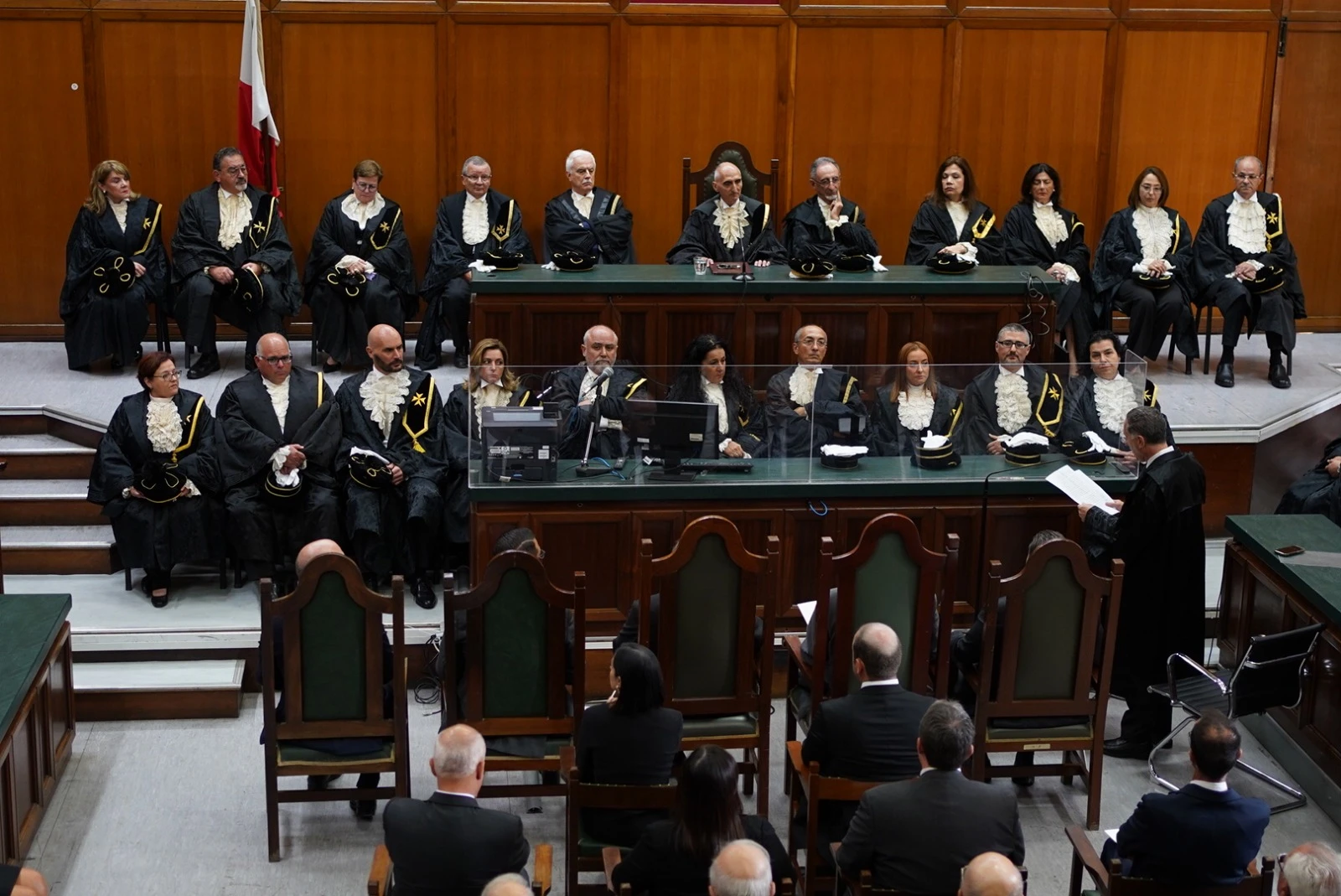


Repubblika is following the public discussion regarding the appointment of the next Chief Justice.
First and foremost, Repubblika expresses its regret that the appointment of the head of the judiciary — a branch that must be independent of both government and parliament — has become a matter of political point-scoring which, frankly, is causing more harm to the independence and authority of the judiciary than the old system ever did, when the Prime Minister chose alone.
To remove any doubt, we do not believe that the Prime Minister should have sole power to decide who becomes Chief Justice. However, the conduct of Prime Minister Robert Abela shows that he is perfectly willing to weaken the Chief Justice before appointment, as long as he still effectively decides alone.
We recall that year after year, the European Commission has described Malta’s method of appointing the Chief Justice as one that does not conform to European democratic norms. This is because members of the judiciary are in no way involved in the selection of the person who will lead them. This weakens judicial independence, which is an essential element of a functioning democracy.
A Chief Justice who appears to have been chosen because the government wanted them (despite the independence with which they may act) will be seen as owing their position to the government. Moreover, judges who aspire to that position risk appearing as though their decisions for or against the government were taken under the shadow of whether the Prime Minister would grant them promotion.
Year after year, the European Commission has recommended that Malta find a way to involve members of the judiciary in the selection of the Chief Justice. And year after year, the government has promised it would find a way to do so.
The fact that constitutional amendments were not passed last year is no excuse for the government and parliament to continue ignoring the judiciary. No constitutional measures are needed for the Prime Minister (and the rest of parliament, which has the duty to appoint the Chief Justice by consensus between both sides) to consult with members of the judiciary and listen to their wishes. This consultation could be led by the Speaker of Parliament or representatives of the parliamentary parties and could take place privately.
We therefore ask whether an effective consultation with the judiciary took place in the selection of the next Chief Justice, what views the judges expressed in that consultation, and if no consultation took place, whether we should now see this happen immediately, before a trivial controversy between political parties results in the appointment of a Chief Justice weakened for no reason.