

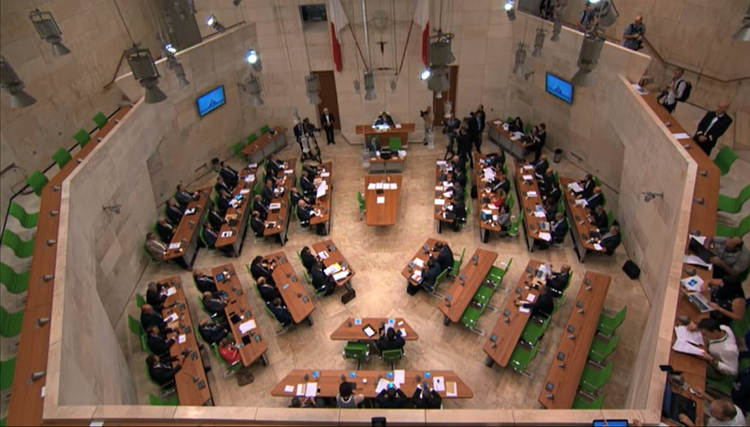


Repubblika notes with deep concern the recent ruling by the Commissioner for Standards in Public Life that, under current Maltese law, Members of Parliament are not formally obliged by the Code of Ethics to tell the truth in their public statements. This interpretation arises solely because the existing code for ministers includes an express obligation of honesty — while the parallel code for MPs does not.
We affirm that ethical conduct in public life must rest on more than technical definitions of what is written on a page. At the core of all codes of ethics — whether for ministers, MPs, or persons of trust — must be an unambiguous commitment to truth, transparency, accountability, and respect for the public interest. Ethical public life requires loyalty to the truth: deliberate or reckless misinformation by persons in positions of public trust undermines democracy and erodes public confidence.
Ethics cannot be enforced as if it were a matter of legal technicalities in a court of law. Should ethical codes only function when hooked on narrow statutory language, we risk reducing standards of conduct to a loophole hunt, rather than a principled framework that guides behaviour. If ethics were no more demanding than the minimum required to avoid a legal breach, we would already have courts for that purpose. What is required is a culture of integrity in public life built on the reasonable expectations of the Maltese public that those elected to serve them will strive to tell the truth and not mislead.
The current ruling highlights a glaring deficiency in our ethical framework. It makes clear that the Codes of Ethics for members of Parliament urgently need not only updating, but also strengthening with clear obligations that reflect the fundamental norms of democratic public life, including truthfulness, candour in public communication, and accountability for misinformation.
Repubblika reiterates that ethical standards should be measured not merely by the narrowest written text, but by the norms of conduct that any citizen can reasonably expect from those in public office. The role of integrity institutions and codes of conduct is not to provide cover for technical loopholes, but to ensure that public officials act with honesty, responsibility and respect for the democratic trust placed in them.