
Yesterday’s verdict brought one criminal trial to an end. It did not bring Malta’s reckoning with the assassination of Daphne Caruana Galizia to an end.
A jury has answered the question that was put before it. We are shocked and profoundly disappointed by its verdict. As we said yesterday, we believed, and continue to believe, that the prosecution presented a serious and compelling case. But respect for the rule of law requires us to respect the authority of the court and the jury’s decision, including when that decision is not the one we believed the evidence warranted. We do not propose to retry that question in public.
But the assassination of a journalist, the corruption she investigated, the failures of the institutions that should have protected her, and the culture of impunity identified by the Public Inquiry are not resolved by the verdict in one criminal case.
The question today is therefore not whether Malta accepts yesterday’s verdict. It must.
The question is what Malta does next.
The Public Inquiry remains
The independent Public Inquiry established that Daphne Caruana Galizia’s assassination was intrinsically linked to her investigative work and that the State must bear responsibility for creating the culture of impunity in which her murder became possible. Those findings have not been erased.
Five years after the Public Inquiry delivered its report, almost none of the reforms demanded have been implemented. Its recommendations cannot remain a document commemorated every July and ignored for the rest of the year. They must now be implemented fully and urgently.
That means serious reform against corruption and abuse of public office. It means measures capable of confronting organised crime and obstruction of justice. It means effective systems for identifying and responding to threats against journalists. It means protection from intimidation, economic pressure and abusive litigation. It means genuine access to information and institutional conditions in which journalism can operate independently of government and powerful private interests.
Protecting journalists does not mean assigning them bodyguards after somebody decides to kill them. It means building a country in which exposing corruption does not make a journalist the enemy of the State.
The corruption Daphne investigated must be prosecuted
Daphne Caruana Galizia was not a random victim of violence. She was a journalist assassinated because of her work exposing corruption and abuse of power. Justice cannot therefore be confined to establishing criminal responsibility for her assassination while tolerating the corruption she was investigating.
Serious allegations arising from matters Daphne investigated remain inadequately investigated or unprosecuted. That failure is intolerable.
Every credible allegation of corruption connected with her work must be investigated independently, promptly and without regard to the political, economic or social power of the people concerned. Where the evidence justifies prosecution, prosecution must follow.
No one should be too powerful to be investigated. No office once occupied, political service once rendered, friendship once enjoyed or wealth accumulated should provide immunity from the law.
Political responsibility does not disappear
The Public Inquiry established the State’s responsibility and identified a culture of impunity generated at the highest levels of Joseph Muscat’s administration. Malta cannot renew itself while rehabilitating the political culture that brought us here.
Those who bore political responsibility for creating, sustaining or defending that culture of impunity should not now be rehabilitated as statesmen or returned to positions of public authority and influence. Criminal responsibility is determined by courts. Political responsibility is determined in democratic life.
Yesterday’s verdict does not extinguish political accountability. This is not vengeance, and it is not collective punishment. It is an elementary requirement that public office carries consequences when exercised in ways that gravely damage democratic institutions.
Nor can Malta pretend that the problem belongs only to the past. The political culture that flourished under Joseph Muscat did not automatically disappear when Joseph Muscat left office. Corruption scandals continue to emerge without adequate consequences. Democratic safeguards remain vulnerable. Institutions charged with defending the rule of law remain exposed to political pressure.
A genuine national reckoning must therefore concern not only what happened then, but how Malta is governed now.
The State must give meaning to its apology
The State has already been found responsible for the circumstances that enabled Daphne’s assassination, and a Prime Minister has previously apologised for the State’s failures.
But an apology is not a sentence spoken once at a press conference. A sincere apology requires acknowledgement, responsibility and change.
The Maltese State must give substance to its apology through action: by accepting without qualification the institutional failures that exposed Daphne to danger; by acknowledging the culture of impunity that surrounded those she investigated; by recognising the vilification in which public authorities participated; and, above all, by completing the reforms that her assassination made unavoidable. Without change, apology becomes a ritual.
The gaps in our laws must be closed
The evidence heard during the trial also raised serious questions about conduct by persons other than the accused, including allegations of leaks of confidential information, interference with or obstruction of investigations, improper contacts between public officials and persons connected with the investigation, and other conduct that may have compromised the work of institutions.
Where such allegations have not already been fully and independently investigated, they must be. Where investigations are already under way, they must be pursued to their proper conclusion. Where the evidence discloses possible criminal conduct, no one should be protected from investigation or prosecution because of office, political connections, or status.
The trial also raised serious questions about whether Maltese criminal law is adequately equipped to deal with conduct intended to shield serious wrongdoing or to frustrate criminal investigations. Those questions require legislative answers as well.
Malta needs comprehensive laws and institutions capable of confronting the convergence of organised crime, corruption, political influence and economic power.
Our criminal law must effectively address participation in mafia-type criminal organisations, deliberate obstruction or misdirection of serious investigations, assistance intended to shield serious offenders, and abuse of public office where public power is used to warn suspects, conceal evidence, obstruct investigators or protect people from the consequences of wrongdoing. Malta cannot wait for another assassination before repairing weaknesses that are already visible.
The police must be independent
No democracy can function properly if people suspected of serious wrongdoing can reasonably hope that political relationships will tell them what investigators know, what investigators intend to do or how they might avoid consequences.
The Malta Police Force must be structurally and operationally independent of government. Appointments, security of tenure, resources and accountability mechanisms must allow investigators to follow the evidence wherever it leads: into Castille, ministries, political parties, major businesses or the police force itself.
Police officers must know that their careers do not depend on pleasing politicians. Politicians must know that the police do not work for them. Citizens must know that the law applies equally to everyone.
Civil society must remain vigilant
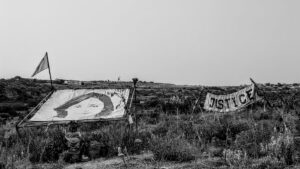
The experience of the past nine years has also shown why organised civil society matters. Journalists investigated. Lawyers litigated. Citizens protested. Occupy Justice and other activists refused to allow Daphne’s memory to be erased. Civil society maintained scrutiny at home and abroad when institutional inertia, hostility and exhaustion might otherwise have produced silence.
That civic mobilisation did not determine yesterday’s verdict and was never entitled to do so. Courts determine criminal responsibility. Its purpose was different: to insist that the institutions of the Republic perform their constitutional duties. That responsibility continues.
Malta needs a culture of legality
Institutional reform alone will not be enough. Malta must invest in citizenship education that teaches legality not merely as obedience to rules, but as a democratic culture.
Future generations must learn that public property belongs to everyone; that public office is a trust; that corruption is not cleverness; that favouritism is not generosity; that silence in the face of wrongdoing is not loyalty; and that people who expose corruption perform a service to their community.
We must teach how organised crime and corruption grow through patronage, fear, dependence, political protection and the normalisation of illegality.
The murder of Daphne Caruana Galizia must be understood by future generations not only as a crime committed on 16 October 2017, but as a warning about what can happen when corruption is tolerated, and institutions cease to resist power.
The work that remains
Repubblika’s response to yesterday’s verdict will not be to dispute the authority of the court. It will be to insist that every other institution now exercises its own authority and fulfils its own responsibilities. Investigate the corruption Daphne exposed. Implement the Public Inquiry in full. Close the gaps in the law. Guarantee the independence of investigators. Protect journalists. Reject the rehabilitation of the political culture that created impunity. Teach another generation that public office is a trust and corruption is an attack on democracy.
Behind all these demands remains the human reality with which we began yesterday: a family has lived for almost nine years with the murder of a wife, mother and daughter, and with everything that followed it. No institutional reform can undo that loss. But the least Malta owes Daphne’s family, and the country she served through her journalism, is to learn from what happened and ensure that the failures that made her assassination possible are never repeated.
Yesterday a trial ended. The work that Malta has still not done remains.
Repubblika intends to continue doing its part.
03.09.2026